. Learn how Generative AI solutions, Autonomous AI Agents, and Multi-modal models drive business.)
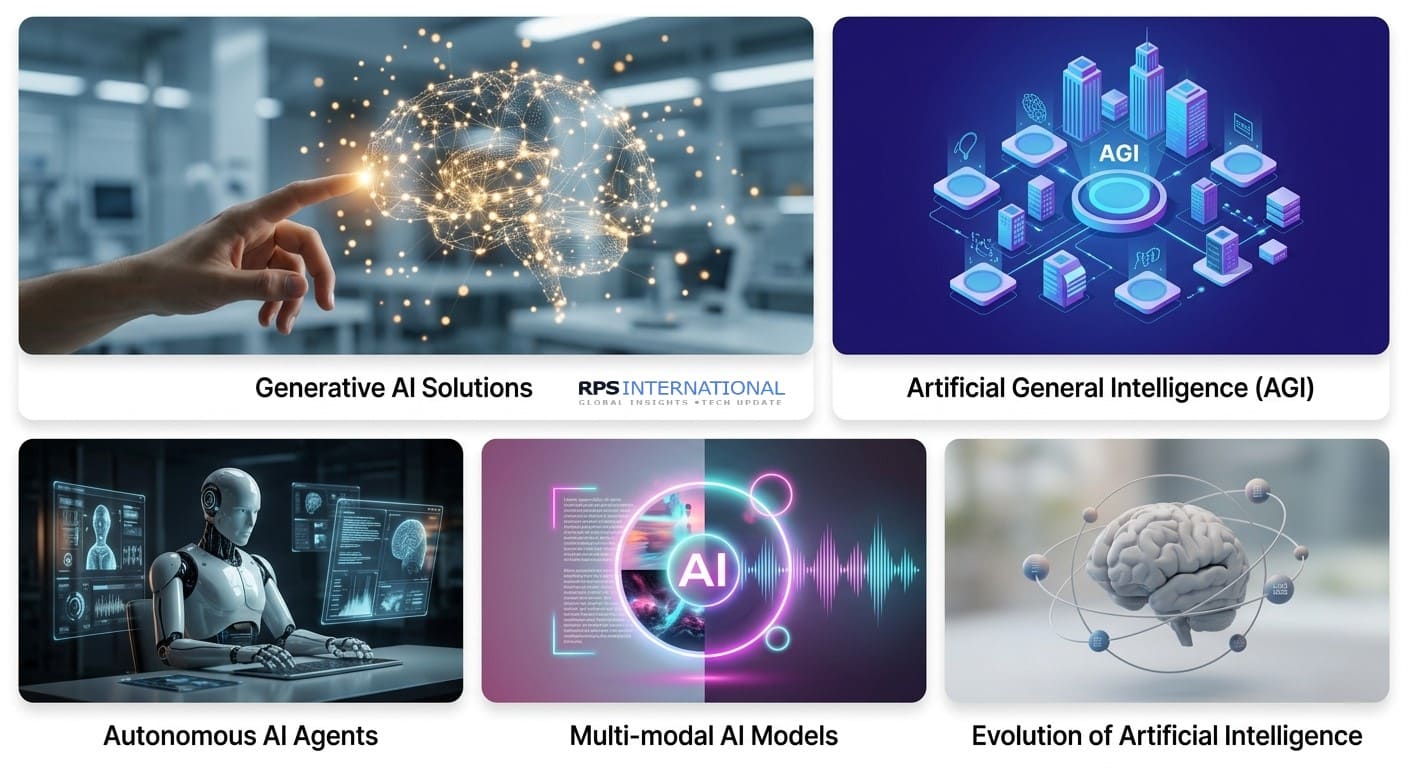
Artificial Intelligence (AI): Architecting the Autonomous Future
💡 Beyond Basic Automation
The transition from “narrow” AI to more versatile applications marks a significant milestone in computing history. Today, businesses are utilizing AI to predict market trends and optimize supply chains in real-time. This shift is largely driven by the democratization of advanced machine learning frameworks.
How Generative AI Solutions are Reshaping Industries
Generative AI solutions represent a paradigm shift in content creation. Unlike traditional software, generative models can synthesize vast amounts of information to produce original code and design assets. Organizations seeking a competitive edge now leverage effective generative AI solutions as a prerequisite for success.
Efficiency
Reducing time-to-market for complex creative projects by automating the initial drafting phases.
Precision
Utilizing data-driven insights to minimize human error in high-stakes financial and medical sectors.
Scale
Deploying thousands of autonomous agents to handle global operations simultaneously.
📊 The Multi-modal Frontier
The next frontier is the development of multi-modal AI models. These systems interpret information across multiple formats simultaneously, mimicking human perception.
Narrow AI
- Siloed data processing (Text ONLY)
- Task-specific rule adherence
- Limited contextual awareness
Multi-modal AI
- Bridges text, vision, and audio
- Real-time environmental analysis
- Holistic decision making
Strategy Tip: Focus on “Small Data” quality. At **RPS International**, we have found that high-fidelity, structured datasets outperform massive, unrefined data lakes by a factor of 4:1 in model accuracy.
🛡️ Artificial General Intelligence (AGI)
AGI represents a theoretical future where a machine possesses the ability to understand and apply knowledge across any domain. While we are still in the developmental phase, **RPS International** is building the foundational architectures that will allow modern enterprises to adapt to these generalized reasoning systems as they emerge.
Understanding the distinction between Narrow AI and AGI helps organizations manage expectations and focus on practical applications that drive current profitability.
📋 Frequently Asked Questions
What is the primary difference between Generative AI and traditional AI?
Traditional AI is designed to classify data based on predefined rules. Generative AI uses machine learning to create entirely new content, such as text, images, or code, based on patterns learned from large datasets.
How do Autonomous AI Agents differ from standard chatbots?
Standard chatbots typically respond to user queries. Autonomous AI Agents go further by executing multi-step tasks independently, such as managing email workflows or procurement, without requiring continuous human input.
How can RPS International help my business implement AI?
**RPS International** provides end-to-end consulting. We help you identify high-value use cases, design scalable AI architectures, and manage the deployment process to ensure your strategy aligns with your long-term goals.