
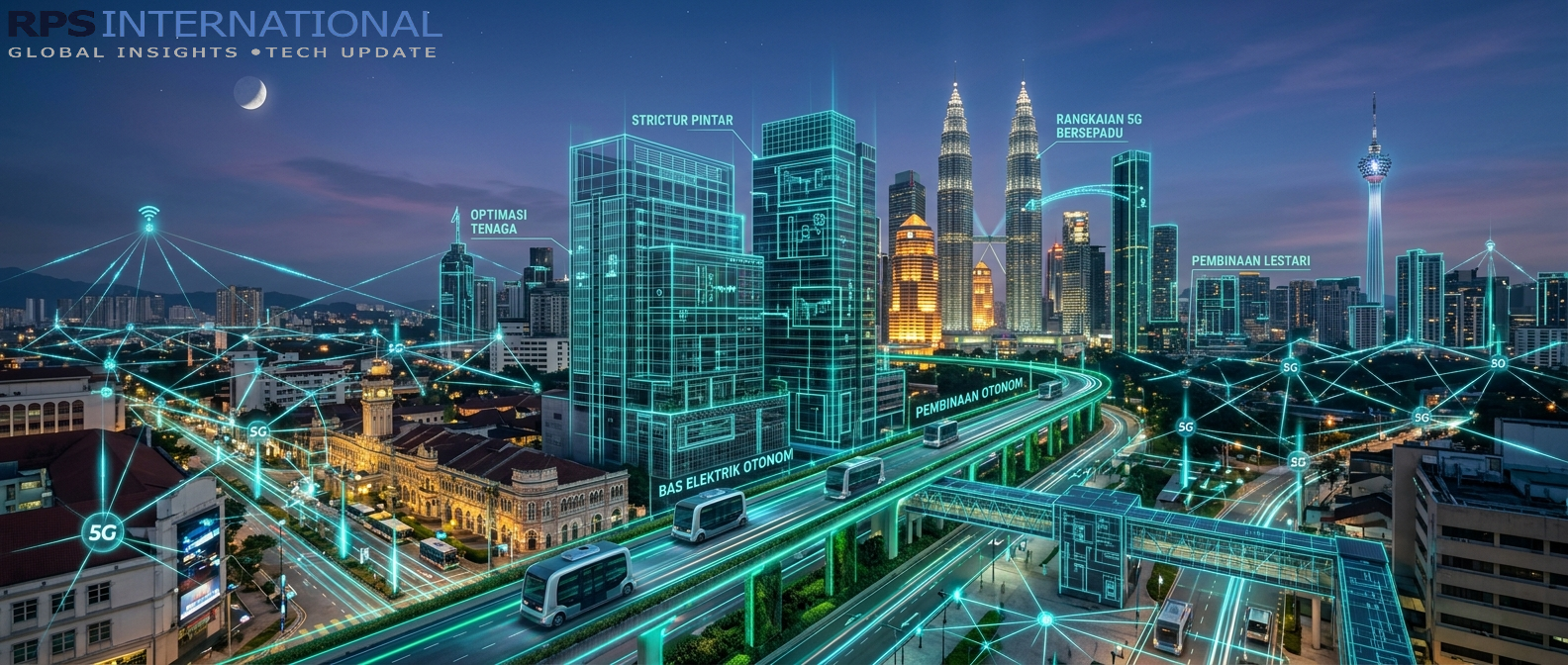
Smart Cities:
The IoT-Driven Infrastructure
The Pillars of the Smart City
Adaptive Traffic Control
AI-managed signals that adjust rhythms based on real-time vehicle and pedestrian flow, reducing congestion by up to 30%.
Smart Lighting Grids
Streetlights that dim when no one is around and brighten during emergencies, doubling as EV charging ports and 5G small cells.
Waste Intelligence
Bins equipped with fill-level sensors that optimize collection routes, saving fuel and reducing city-wide carbon emissions.
The Digital Twin Revolution
In 2026, leading cities like Singapore, Helsinki, and Seoul operate on a Digital Twin model. This is a high-fidelity virtual replica of the city that is updated in real-time by millions of IoT data points.
City officials can “simulate” a massive storm or a subway shutdown before it happens, allowing them to test emergency responses and infrastructure stress points in a risk-free digital environment.
2026 Milestone:
Predictive maintenance sensors on bridges and tunnels have reduced structural repair costs by $4.2B across the US this year.
The Tech Stack
Smart infrastructure relies on a seamless handoff between four core technologies:
- Edge Computing: Processing data at the source (the sensor) to ensure ultra-low latency.
- 6G/5G Connectivity: The high-speed wireless fabric that connects billions of devices.
- Blockchain: Ensuring the integrity and security of civic data and public transactions.
- LPWAN: Low-Power Wide-Area Networks designed for sensors that need to run for years on a single battery.
Sustainability via Data
The ultimate goal of the 2026 smart city is Net-Zero Urbanism. IoT is the primary tool for achieving this. Smart water grids now detect leaks as small as a pinhole within seconds, preventing the loss of millions of gallons of treated water. Similarly, building management systems (BMS) integrated with the city’s energy grid use Demand Response AI to shift non-essential power usage to times when renewable energy production is at its peak.
Furthermore, air quality sensors are now ubiquitous. These devices provide hyper-local “pollen and pollution” maps to citizens via their smartphones, allowing vulnerable populations to choose routes that avoid high-toxin areas. This isn’t just about efficiency; it’s about public health and the quality of urban life.
Urban Evolution: Traditional vs. Smart
| Sector | Legacy City (2015-2020) | Smart City (2026) |
|---|---|---|
| Infrastructure | Fixed & Passive | Sensing & Adaptive |
| Maintenance | Reactive (Fix when broken) | Predictive (Fix before failure) |
| Public Safety | Patrol-Based | AI-Assisted Threat Detection |
| Governance | Intuition & Politics | Data-Driven & Algorithmic |
Build a Resilient Urban Future
The cities of tomorrow are being built with sensors and code today. Discover how to integrate IoT into your municipality’s infrastructure roadmap.