
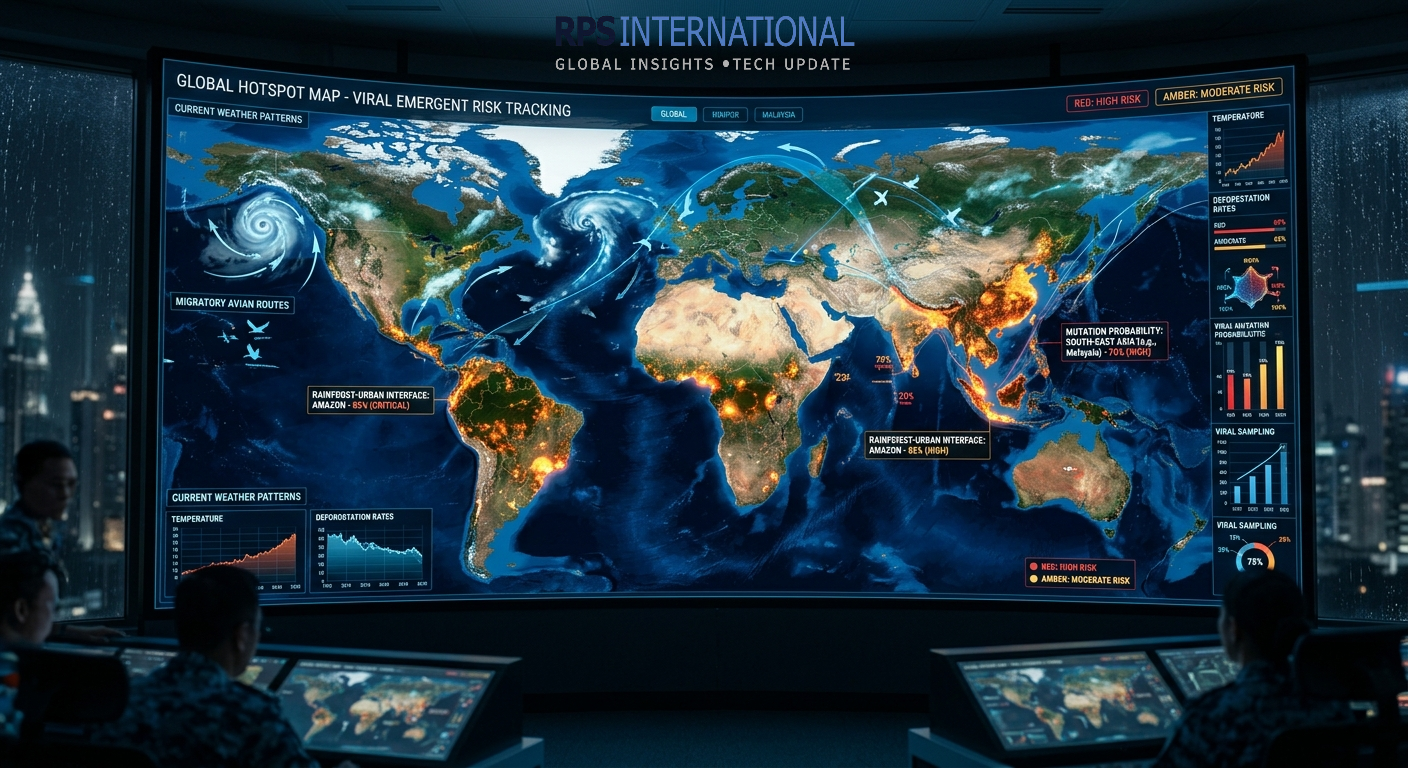
THE VIRALWATCH AI:
STOPPING THE NEXT ONE
The Three-Layer Defense
1. Sentinel Sequencing
Autonomous bio-stations placed in high-risk zones constantly sample air, water, and soil for DNA fragments. These “Sentinel Nodes” identify novel viral sequences instantly, far faster than traditional lab culture methods.
2. Climate Correlation
AI models analyze satellite data to predict where droughts or floods will force wildlife into human settlements. These “Clash Zones” are then prioritized for immediate bio-surveillance and local health education.
“We’ve moved from hunting viruses to predicting their evolution. The 2026 ViralWatch system doesn’t just see what is—it sees what is about to happen. It is the first true immune system for the planet.”
— Dr. Amara Okafor, Director of Pandemic Prevention
Knowledge is the First Vaccine.
Stay informed on the front lines of biosecurity. Download the 2026 Global Viral Risk Assessment Report.