
DESIGNING FOR
THE N-TH DIMENSION
The Three Pillars of Inclusion
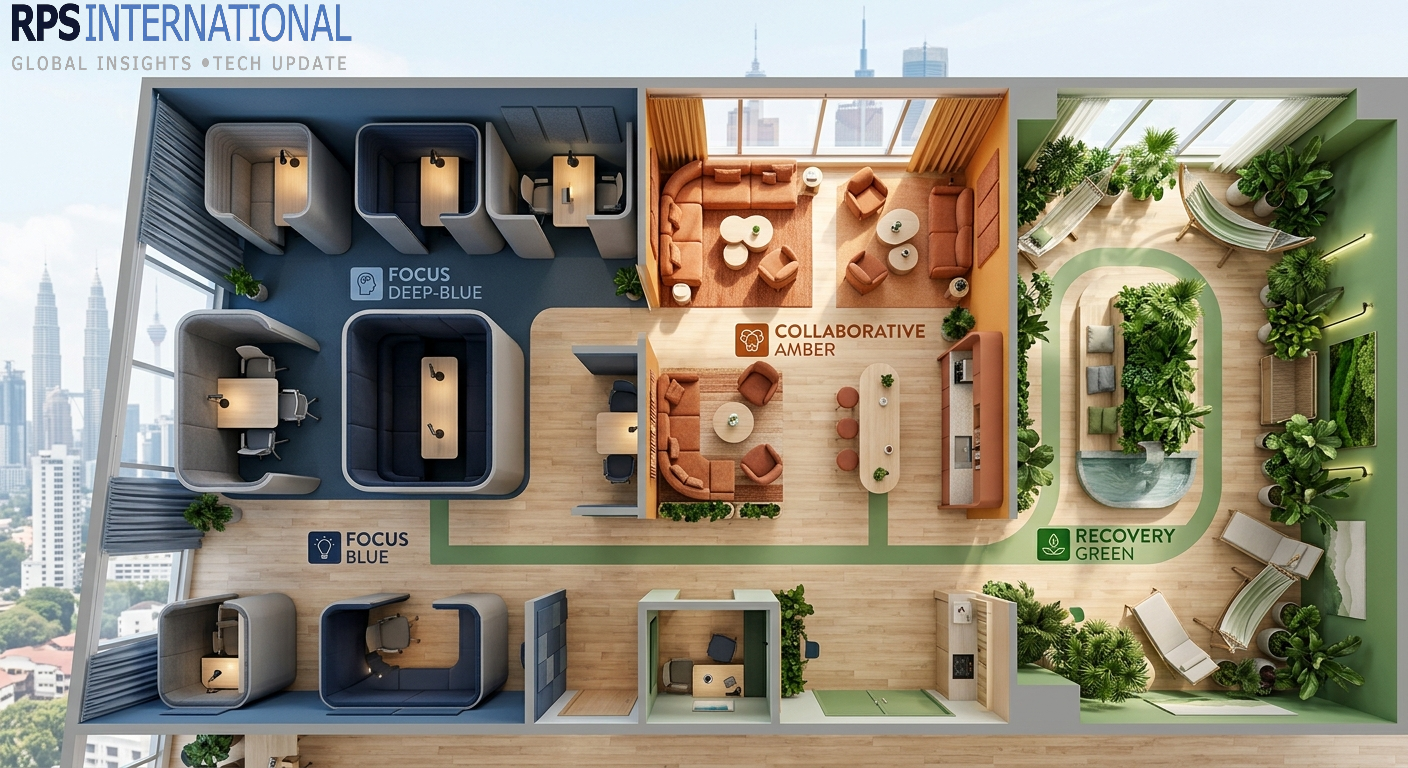
1. Hyper-Zoning
Instead of one massive floor, the 2026 office is a ‘Sensory Neighborhood.’ Employees choose their seat based on their current task’s cognitive demand—ranging from ‘High-Stimulation’ social hubs to ‘Low-Stimulation’ focus libraries.
2. Visual Predictability
For autistic or ADHD employees, visual clutter is a cognitive drain. Design now favors matte finishes, hidden storage to reduce ‘visual noise,’ and clear, intuitive wayfinding that eliminates ‘spatial anxiety’ in the workplace.
“In 2026, we’ve stopped asking ‘How do we fit people into the office?’ and started asking ‘How does the office empower the person?’ Neuro-inclusive design isn’t a niche requirement—it’s the new gold standard for all high-performance organizations.”
— Dr. Lianne Wu, Chief People Officer, TechFlow 2026
Unlock Your Team’s Full Potential.
Is your workspace designed for every brain? Download the 2026 Neuro-Inclusive Design Audit for Modern Offices.