
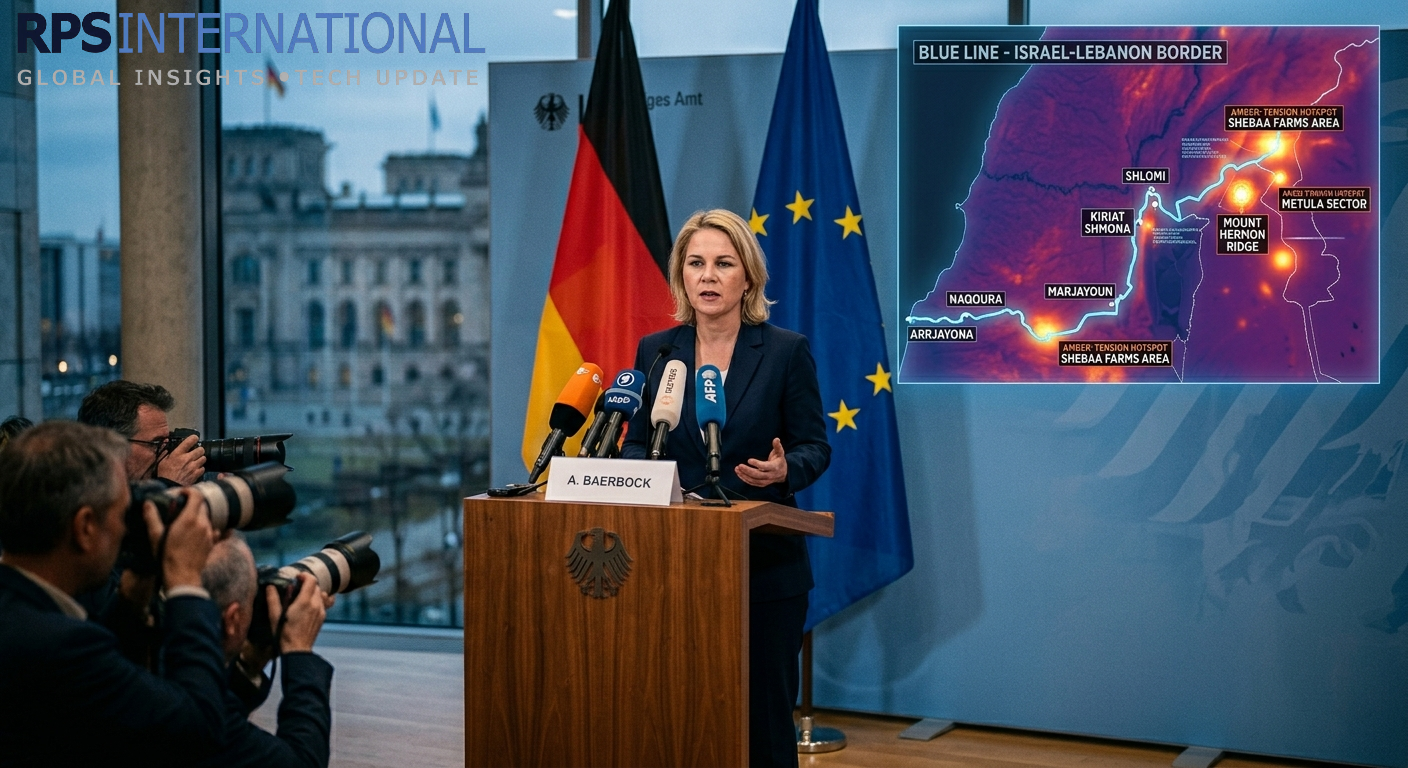
BERLIN’S BORDER
PLEA
The German Doctrine of Containment
The Migration & Stability Link
Berlin’s 2026 urgency is driven by domestic realities. A full-scale collapse of the Lebanese border would likely lead to a massive displacement of civilians, which the German government views as a potential catalyst for political instability within the EU. Therefore, de-escalation in the south is seen as a ‘domestic security priority’ for Germany.
Shuttle Diplomacy via UNIFIL
Germany has proposed an ‘Enhanced Mandate’ for UNIFIL in 2026, advocating for increased technical surveillance and patrol powers. By acting as a mediator who talks to all Lebanese state actors, Berlin hopes to create a diplomatic ‘airlock’ that prevents local skirmishes from escalating into a high-intensity conflict.
“A regional spillover is not a possibility—it is an imminent threat. In 2026, we cannot afford to be bystanders. The stability of Southern Lebanon is not just a regional issue; it is a foundational pillar of European security. We must find the path back to diplomacy before the military logic takes over completely.”
— Julian Vane, European Strategic Analyst 2026
Monitoring the Middle East.
Stay informed on the European diplomatic response. Access the 2026 Intelligence Brief on Middle East Spillover Risks.