
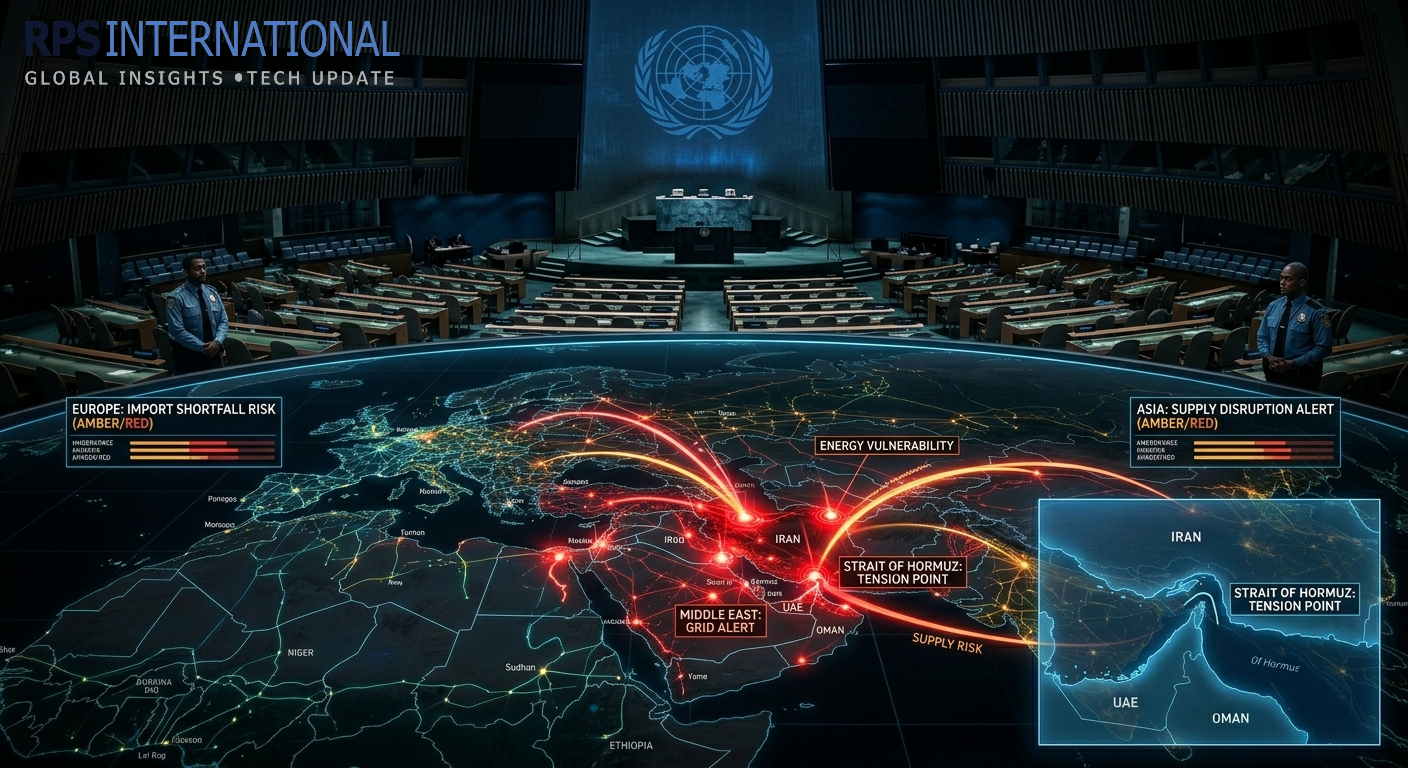
THE ENERGY
FRAGILITY
The Cascading Failure Analysis
Cyber-Physical Interdependence
In 2026, energy infrastructure is fully digitalized. The UN warns that the current physical conflict is being mirrored by a massive cyber-offensive against SCADA systems. A breach in a Persian Gulf hub no longer just stops oil; it can desynchronize power grids across continents due to the automated logic of global supply chains.
The Decoupling Mandate
The 2026 UN report advocates for an “Emergency Microgrid Strategy.” By moving away from hyper-centralized refineries and massive gas pipelines toward decentralized green hydrogen and solar clusters, the UN believes nations can insulate their populations from the “Chokepoint Geopolitics” that define the current era.
“We are seeing the end of the era of ‘Cheap, Easy Energy.’ The 2026 crisis is proof that energy security is national security. If your grid relies on a single strait or a single set of vulnerable pipelines thousands of miles away, you are essentially outsourcing your sovereignty to a conflict zone.”
— Julian Vane, UN Strategic Energy Advisor 2026
Build Resilience.
Is your nation prepared for the 2026 Grid Shock? Access the UN Emergency Infrastructure & De-risking Blueprint.