
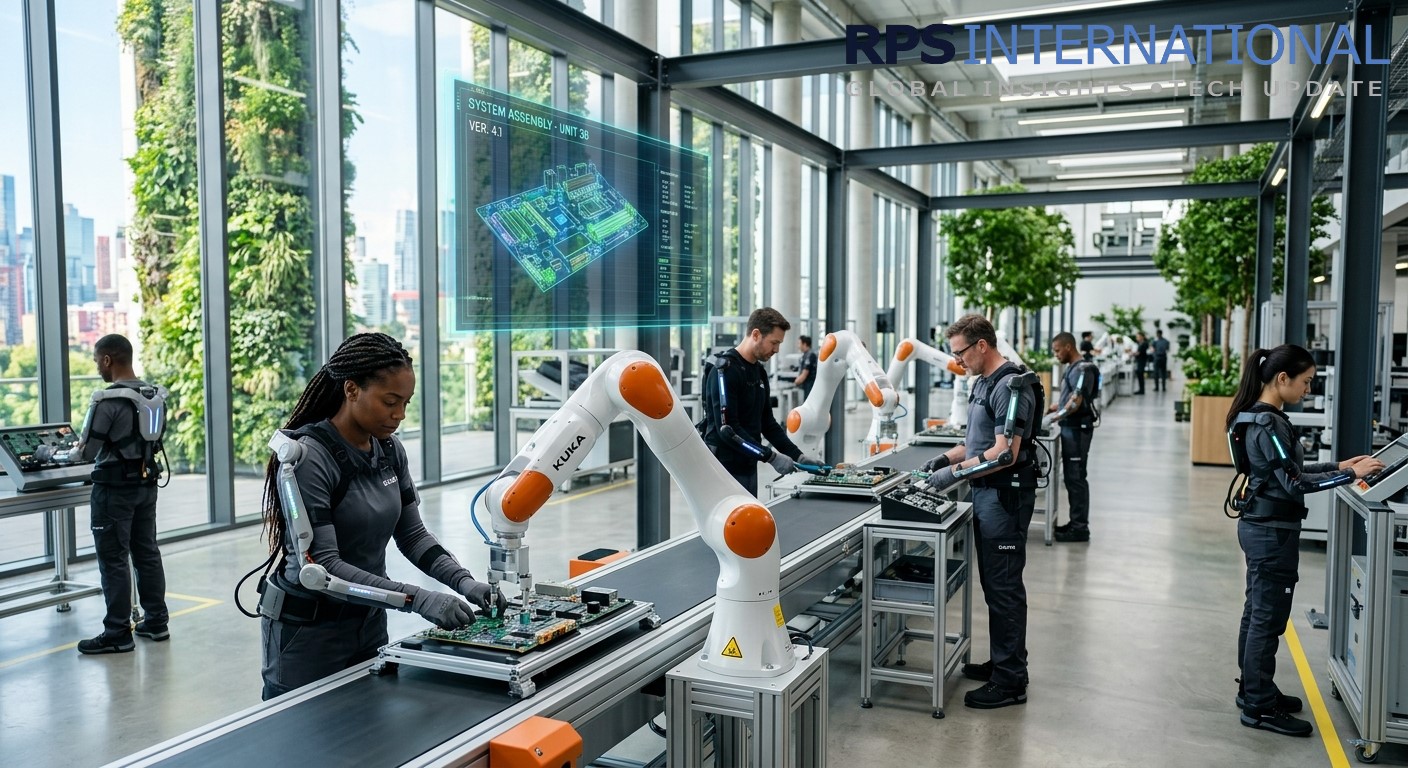
Robots vs Human Labor: The Future of Industry
🤖 The New Labor Dynamics
The 2026 factory floor is a symphony of Spatial Intelligence. Autonomous Mobile Robots (AMRs) navigate complex environments with human-like agility, allowing for a 24/7 production cycle without fatigue.
Precision & Speed
Autonomous systems perform repetitive micro-tasks with sub-millimeter accuracy that exceeds biological capability.
Human Cognitive Edge
Humans pivot to complex problem-solving, quality assurance, and the “human touch” in custom artisan manufacturing.
📊 Key Competitive Advantages
Lights-Out Manufacturing
Factories that operate entirely in the dark without human presence for days, drastically reducing energy costs and environmental impact.
Skill-Upgrading Shift
The workforce is transitioning into “Robot Supervisors,” managing fleets of AI agents through intuitive digital twin interfaces.
2026 Robotics Milestones
Robots with synthetic skin that can “feel” the fragility of materials, preventing damage to delicate components.
Robots that identify their own mechanical wear and request autonomous repair parts before failing.
Multiple robots communicating instantly to complete massive assembly tasks as a single cohesive unit.
Robotics & Labor FAQ
Are jobs actually being lost?
While traditional manual roles are decreasing, new roles in robotics maintenance, AI training, and workflow design are growing at a faster rate.
Is human safety guaranteed?
Modern 2026 Cobots use ultra-sensitive LiDAR and torque sensors to stop instantly if they detect human contact, making shared spaces safer than ever.