
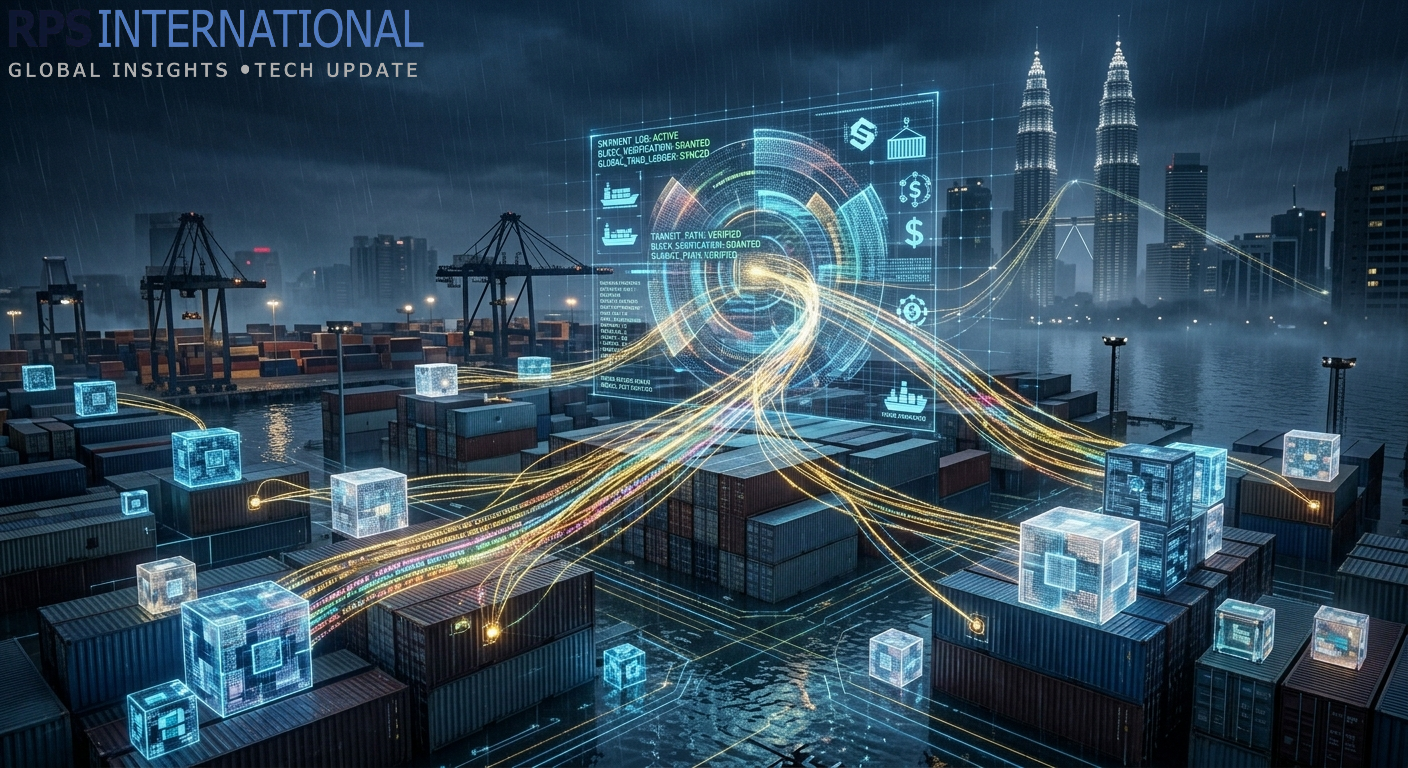
The Blockchain Engine:
Liquidity at the Speed of Light
How Blockchain Unlocks Capital
Deep-Tier Financing
Blockchain “tokenizes” the anchor buyer’s creditworthiness, allowing it to flow down to Tier 2 and Tier 3 suppliers, granting them access to lower interest rates.
Smart Contract Escrow
Payments are triggered automatically when IoT sensors confirm a shipment has arrived at a specific GPS coordinate, eliminating manual invoicing delays.
Fraud Elimination
Since the ledger is immutable, “Double Financing” (using the same invoice to get loans from two banks) has become mathematically impossible.
The CBDC Integration
In 2026, blockchain supply chains are no longer isolated “walled gardens.” They are now integrated with Central Bank Digital Currencies (CBDCs). This allows for cross-border settlements that happen in seconds rather than days, with the currency conversion occurring instantly on-chain.
For global manufacturers, this means the “Cash-to-Cash Cycle” has been slashed by up to 60%, freeing up billions in working capital that used to be trapped in transit.
2026 Efficiency Metric:
Enterprises using blockchain-finance platforms have seen a 30% reduction in supply chain disruptions due to supplier insolvency.
The Tech Stack
What powers modern supply chain finance in 2026:
- Layer 2 Scaling: Handling millions of micro-transactions without high gas fees.
- IoT Oracles: Bridging the gap between the physical world (RFID/GPS) and the digital ledger.
- Zero-Knowledge Proofs (ZKP): Allowing banks to verify a supplier’s health without seeing their private customer lists.
- Stablecoin Rails: Providing a non-volatile medium for instant global settlements.
Programmable Money: ESG Incentives
One of the most transformative roles of blockchain in 2026 is the automation of ESG (Environmental, Social, and Governance) incentives. Finance is now “programmable.” A buyer can set up a smart contract that automatically offers a lower interest rate to a supplier if their blockchain-verified carbon footprint falls below a certain threshold. This turns sustainability from a compliance burden into a direct financial benefit, creating a self-reinforcing loop of green logistics.
Traditional vs. Blockchain Finance
| Feature | Legacy Finance (Paper-Based) | Blockchain Finance (2026) |
|---|---|---|
| Visibility | Limited to Tier 1 Suppliers | End-to-End (Deep Tier) |
| Settlement | T+3 to T+5 Days | Instant (Near T+0) |
| Automation | Manual Invoicing & Reconciliation | Smart Contract Triggered |
| Risk Assessment | Historical Data (Static) | Real-Time Data (Dynamic) |
Unlock Your Frozen Capital
Your supply chain is full of untapped value. Discover how our 2026 blockchain finance platform can provide the liquidity your network deserves.