
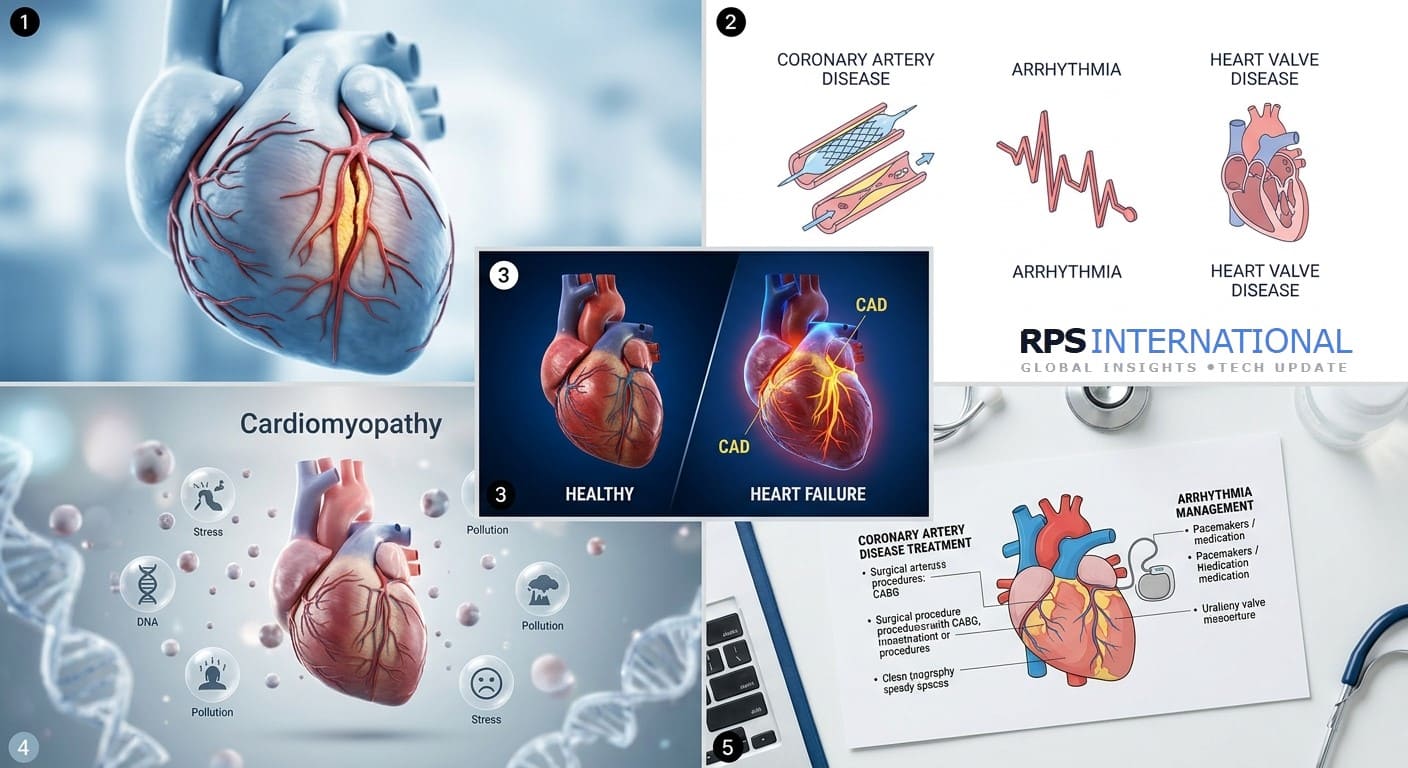
Coronary Artery Disease: Managing the Foundation
CAD is the most common form of heart disease, occurring when the “fuel lines” to your heart become narrowed by plaque. Understanding your treatment options is the first step toward reclaiming your vitality.
Atherosclerosis & Arterial Health
CAD develops through atherosclerosis—the gradual buildup of cholesterol, fats, and cellular waste along arterial walls. At RPS International, we specialize in identifying these blockages before they lead to ischemia.
Angina (chest pain), shortness of breath, and unexplained fatigue during physical exertion.
Hypertension, high cholesterol, smoking, diabetes, and chronic systemic inflammation.
Clinical Treatment Protocols
| Tier | Approach | Primary Goal |
|---|---|---|
| Lifestyle | Heart-healthy diet, regular activity, and stress management. | Stabilize existing plaque. |
| Medical | Statins, beta-blockers, and antiplatelet agents. | Reduce blood pressure and cholesterol. |
| Surgical | Angioplasty, stenting, or bypass grafting (CABG). | Restore adequate blood circulation. |
CAD vs. Related Conditions
Heart Failure
While CAD is a disease of the arteries, Heart Failure is a condition where the muscle is too weak to pump effectively.
Arrhythmia
CAD starves the heart of oxygen, disrupting electrical signals and causing irregular heartbeats.
Cardiomyopathy
Chronic ischemia from CAD can lead to secondary cardiomyopathy, weakening the heart walls permanently.
Clinical Insights (FAQ)
Is there a cure for Coronary Artery Disease?
It is a chronic condition, but with proper management, it can be stabilized. Many patients live full, active lives through modern intervention and lifestyle changes.
How is CAD treatment determined?
Severity is assessed via diagnostic imaging (ECG, stress tests, angiograms). Treatment is then tailored to the specific risk profile and extent of blockage.
Can lifestyle changes actually reverse CAD?
While they may not remove advanced calcified blockages, they can significantly slow progression and stabilize plaque to prevent ruptures.
Partner with Dedicated Specialists
Take the first step toward a stronger cardiovascular future. Reach out to RPS International for expert diagnostics and personalized care.