
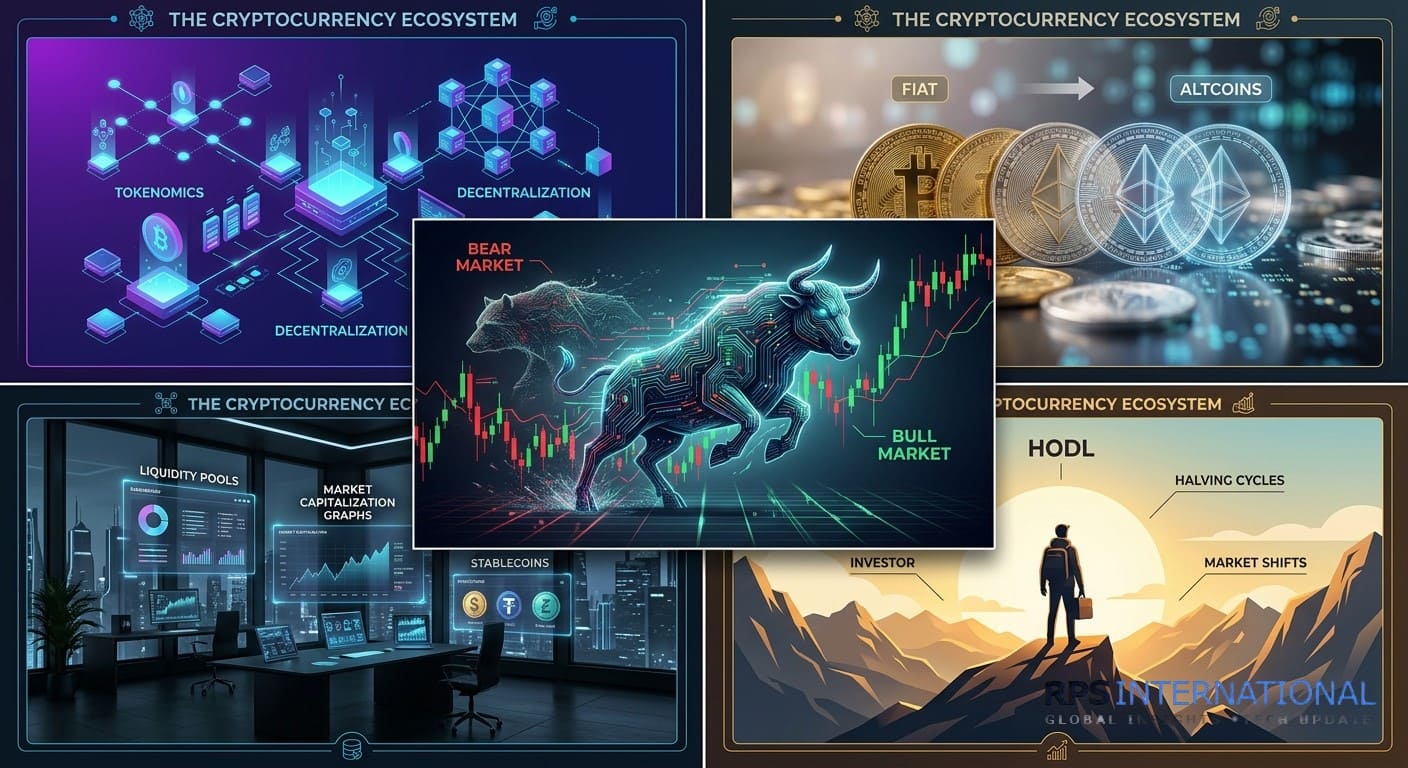
Cryptocurrency: Decentralizing the Global Economy
⚙️ Understanding Core Mechanics
At the technical foundation lies cryptography. This field of mathematics secures transactions by ensuring only the rightful owner of a digital wallet can initiate a transfer. It prevents double-spending and ensures supply is governed by code, not human discretion.
Blockchain
A decentralized ledger distributed across thousands of nodes worldwide, creating “trustless” verification.
Tokenomics
The study of supply and utility that balances scarcity to incentivize network participants long-term.
📊 The Asset Landscape
Altcoins & Stablecoins
Beyond Bitcoin, altcoins serve specialized niches like smart contracts. To mitigate swings, stablecoins peg their value to assets like the US Dollar.
DeFi (Decentralized Finance)
DeFi allows users to access lending, borrowing, and yield generation directly on the blockchain, disrupting traditional banking services.
Analyzing Market Dynamics
The most accurate picture of a project’s size, calculated by multiplying circulating supply by price.
Ensures you can enter or exit positions without significantly impacting the asset’s market price.
Sudden price movements driven by macroeconomic news, regulations, or investor sentiment shifts.
Frequently Asked Questions
What happens during a Bitcoin halving?
The reward for mining blocks is cut in half, reducing new supply and often acting as a catalyst for new market cycles.
What does it mean to HODL?
This strategy emphasizes holding assets long-term regardless of fluctuations, aiming to build long-term wealth through crypto.