
Formula 1:
Defending the Data Stream
The Hardened Architecture
Encrypted Microwave Bursts
F1 cars use specific microwave frequencies to send data to trackside receivers. In 2026, these “bursts” are randomized across spectrums to prevent frequency jamming or “Man-in-the-Middle” attacks from outside the paddock.
Zero-Trust Telemetry
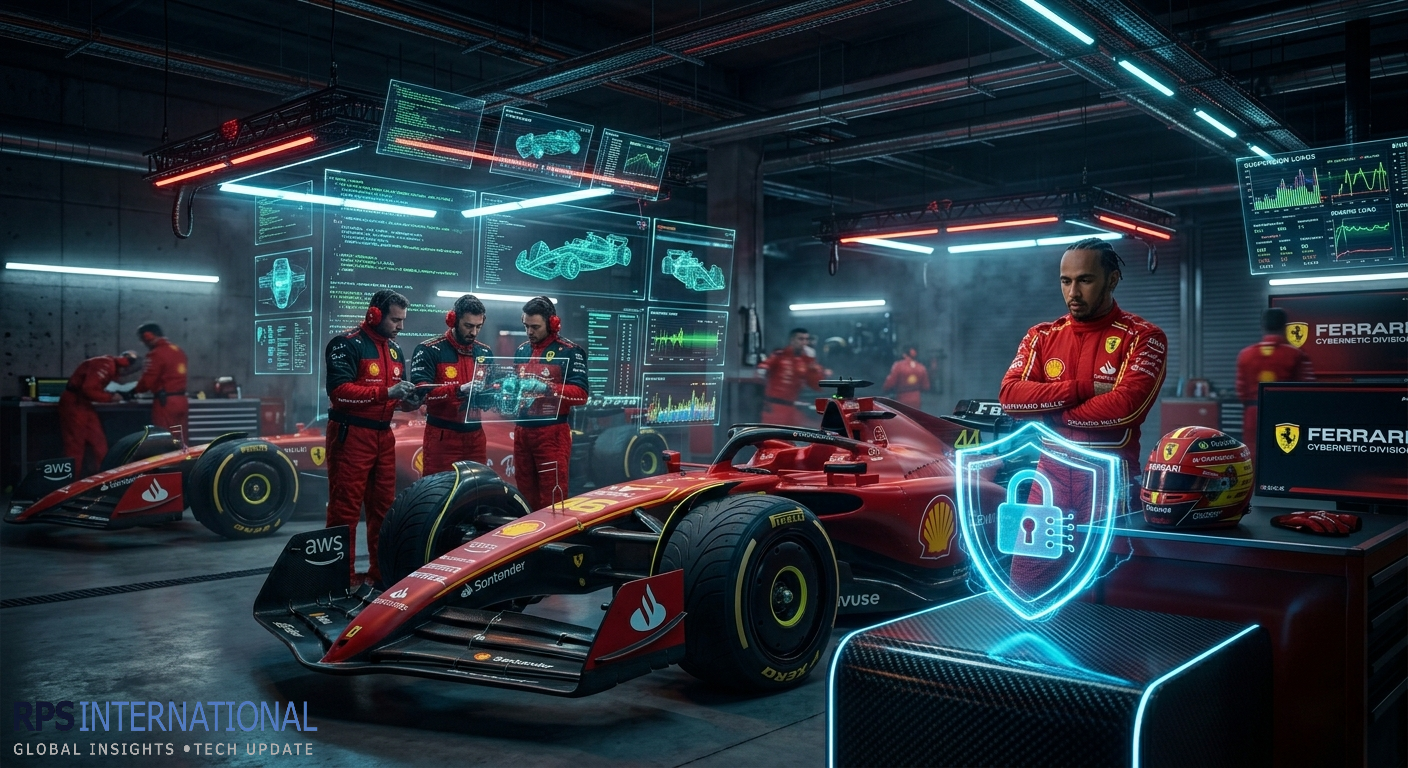
Every sensor on the car now requires a unique cryptographic signature. If a sensor value doesn’t match its “digital twin” in the cloud, the system flags it as compromised, preventing corrupted data from influencing race strategy.
Shadow Factories
Teams maintain a 1:1 digital replica of their trackside network at their HQ. This allows for real-time “integrity checks”—if the data in the garage deviates from the factory’s expected model, a breach is assumed.
The Human Element
Cybersecurity isn’t just about code; it’s about people. In 2026, team personnel are subject to rigorous digital hygiene protocols. USB ports on garage computers are physically disabled, and “Tactical Edge” devices are used for all communications to bypass public networks entirely.
“We have seen attempts to spoof pit-to-car radio,” says one lead systems engineer. “But the real war is silent. It’s the attempt to slowly drift our fuel consumption data so we run out of energy three laps before the finish.”
Critical Stat:
An F1 team’s firewall blocks approximately 45,000 “probes” or minor intrusion attempts during a single race weekend.
The 2026 Cyber-Stack
- Compute: Liquid-cooled Edge Servers
- Security: AI-Native XDR Platform
- Network: Private 5G + Microwave Hub
- Hardware: Tamper-evident E-Fuses
- Recovery: Instant Offline Data Snapshot
Securing the Podium
The race for the World Championship is won in the factory, on the track, and in the firewall. Stay ahead of the curve with our deep dives into F1’s digital transformation.