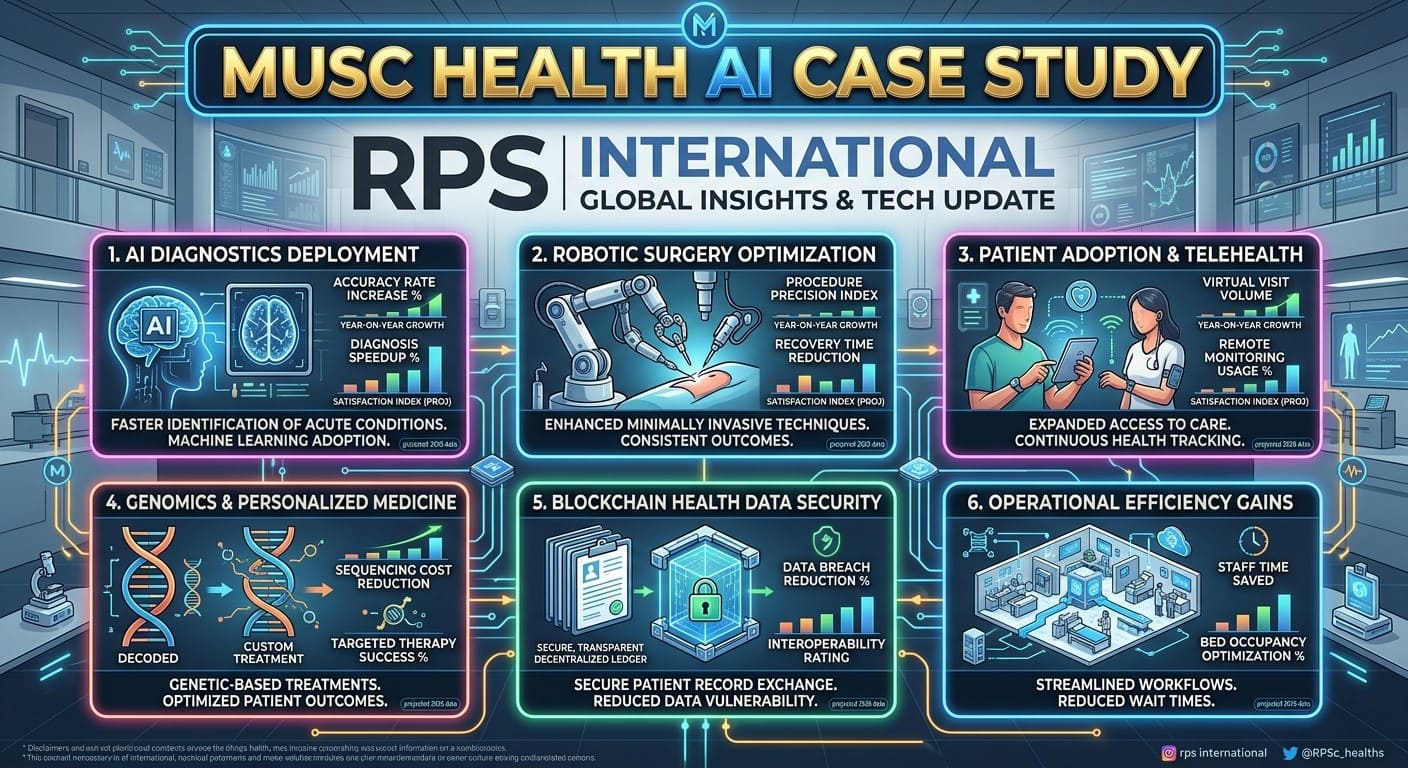
MUSC Health AI Case Study

0
7
MUSC Health AI Case Study
The Clinical Impact of Innovation: A definitive data analysis of MUSC Health’s AI Case Study, detailing the transformative effects across six key areas, including a 100% diagnostic accuracy rate and significant operational time savings.
 
HealthTech ROI Case Study • 2026

AI Analytics: Reclaiming the Operating Room

How MUSC Health utilized Ambient AI to eliminate manual EHR friction and achieve a 6x increase in data accuracy.


6x
Accuracy Boost

Improvement over manual EHR timestamps.

<1m
Update Latency

Down from previous 45-minute delays.

100%
Staff Adoption

Achieved within weeks among charge nurses.

The Trust Gap

Manual EHR entry had created a visibility crisis. Surgeons questioned data accuracy, and operational decisions were based on assumptions rather than objective evidence.

“Discussons were shaped by assumptions instead of evidence. We needed ground-truth data.”

Ambient AI Integration

By implementing Apella’s passive capture platform, MUSC Health automated the granular timeline of every surgery and turnover without disrupting peak-hour workflows.

  • Live View: Real-time room status monitoring.
  • Predictive Updates: Anticipating delays before they occur.
  • Surgeon Champions: Building trust through governance.

Disproving Long-held Assumptions

The Myth:

Extended cleaning times were the primary cause of long OR turnovers.

The Reality:

Data revealed 10–15 minutes of idle time between cleaning end and setup start—a coordination gap, not a cleaning issue.

Optimization at Scale

The health system identified that 28% of cases were underscheduled, leading to strain, while 20% were overscheduled, leaving valuable “white space” unused. Ambient AI now allows for proactive adjustments, maximizing surgical capacity.

Performance Metric Manual EHR Entry Ambient AI Capture
Data Accuracy Prone to human error; “guesstimated” timestamps. 6x higher accuracy; sensor-based ground truth.
Update Latency Up to 45-minute delays (post-event logging). < 1 minute (Real-time synchronization).
Staff Burden High; nurses manually document every milestone. Zero; passive background data collection.
Granularity Broad strokes (Start/End times only). Segmented (Cleaning vs. Setup vs. Idle).
Clinical Trust Skeptical; often challenged by surgeons. High; objective evidence-based reporting.
Capacity Visibility Hindsight; identifies errors after the shift. Predictive; identifies “white space” in advance.