
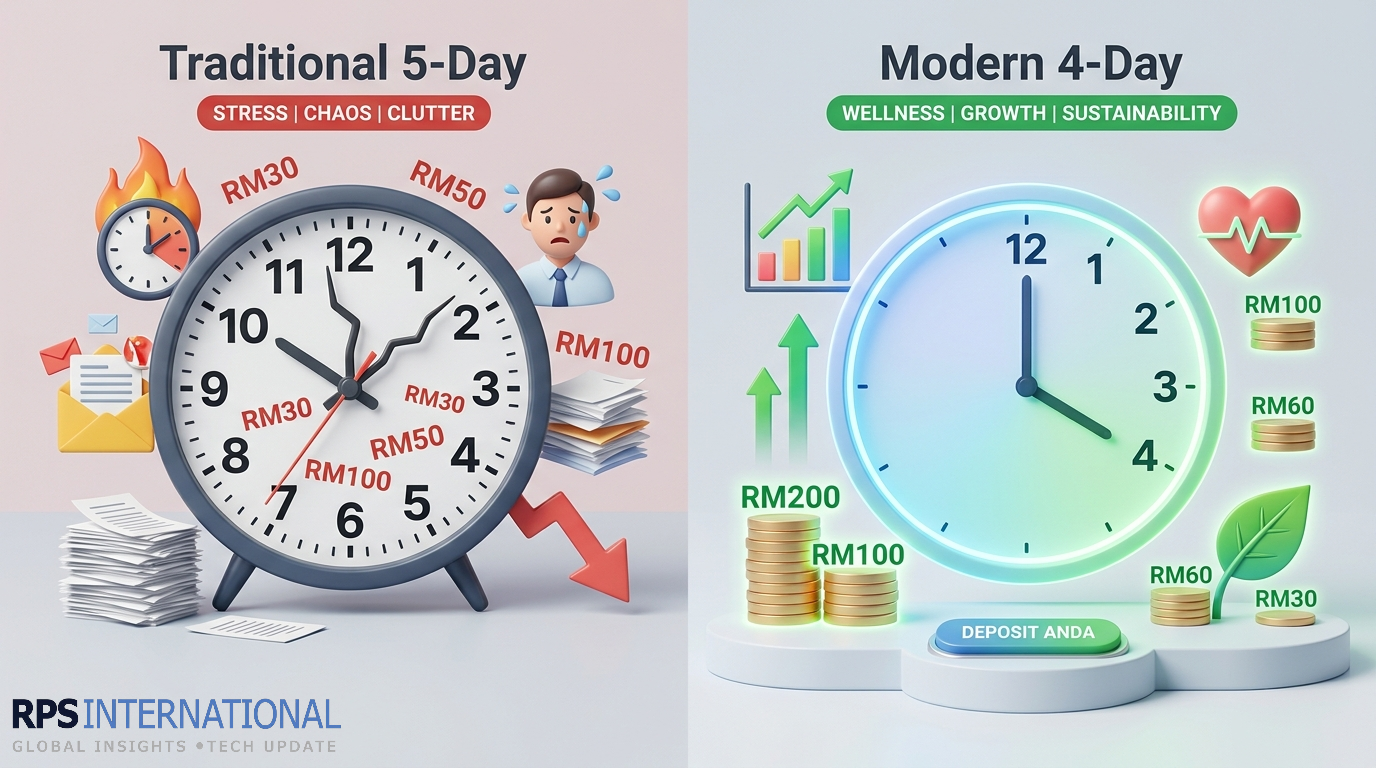
THE 4-DAY WEEK:
PRODUCTIVITY UNLOCKED
The 2026 Performance Metrics
The Revenue Myth
Critics claimed revenue would fall with hours. Instead, companies reported an average 15% increase, driven by higher employee engagement and a more focused “output-over-hours” culture.
Attrition & Retention
The cost of hiring has plummeted. Trial companies saw a 32% drop in staff leaving, as employees cited the extra day off as being “worth more than a 10% raise.”
Beyond the Spreadsheet
It’s not just about the numbers; it’s about the “dosage” of work. 2026 research from 4 Day Week Global shows that employees are now accomplishing in 33 hours what used to take 38. The difference? Less procrastination, fewer unnecessary meetings, and a radical shift in how we value “rest” as a prerequisite for “work.”
Key Finding:
71% of employees reported reduced burnout, while 42% used their extra day for environmentally friendly activities like walking, cycling, or local volunteering.
Work Smarter. Live More.
Ready to implement the 100-80-100 model in your organization? Access the full 2026 Implementation Toolkit.