
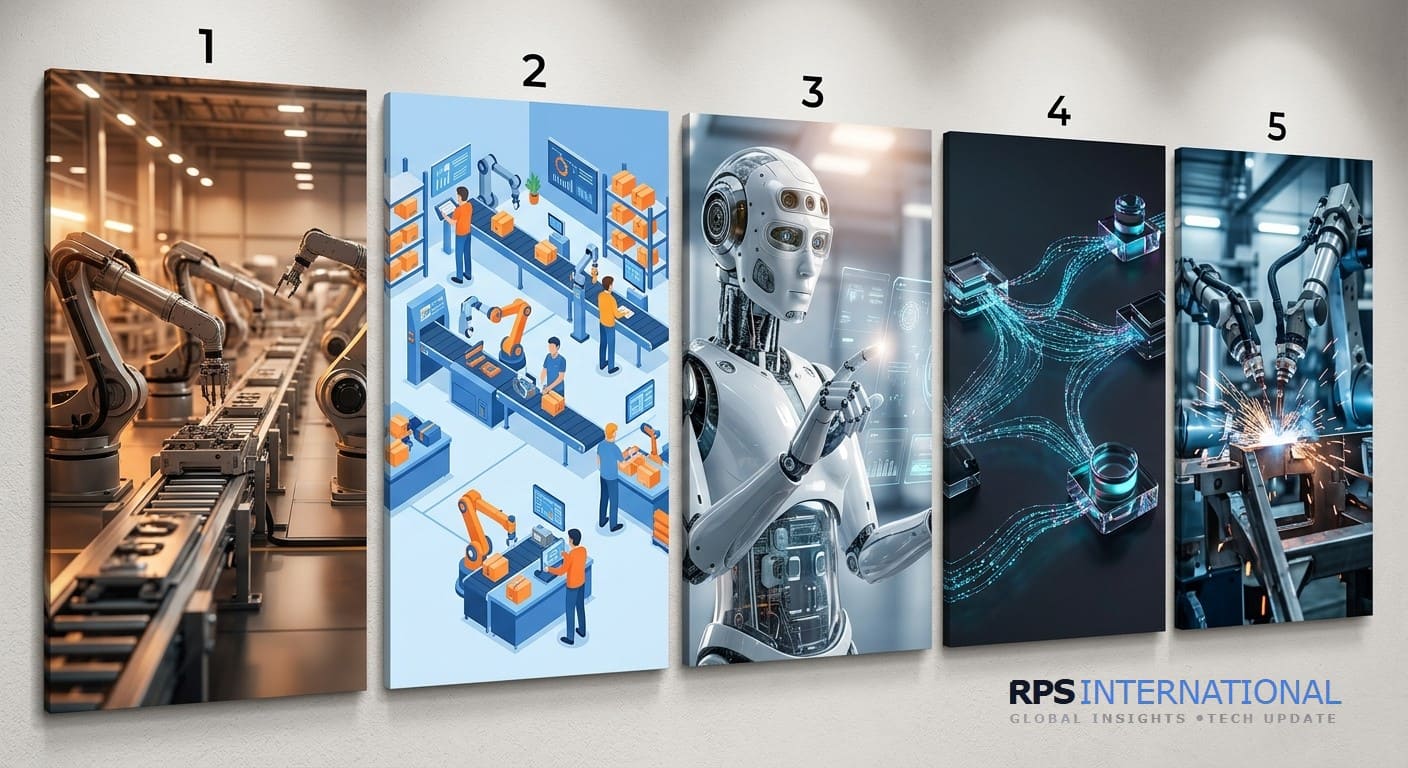
Robotics: Precision Engineering for the Next Era
🚀 The Evolution of Modern Robotics
The acceleration of robotics technology is now exponential. In 2026, we are witnessing a transition from rigid, pre-programmed machines to intelligent, adaptive systems.
Mechatronics Engineering
The fusion of mechanics, electronics, and computing to create highly responsive and intelligent robotic hardware.
Multi-axis Robotic Integration
Synchronized movement across 6+ axes for complex manufacturing tasks requiring extreme dexterity and speed.
Robotic Arm Precision
Achieving sub-millimeter consistency in high-volume production through advanced calibration and feedback loops.
⚙️ Perception and Control Systems
Computer Vision for Robots
Utilizing neural networks to allow machines to recognize objects, navigate clutter, and ensure safety in real-time environments.
Generative AI for Control
Implementing Large Behavior Models (LBMs) to let robots learn new tasks through observation rather than rigid coding.
Biomimetic Robotic Sensors
Sensors inspired by biological systems to provide robots with a human-like sense of touch, pressure, and orientation.
📦 The Autonomous Supply Chain
AI-Driven Warehouse Automation
Integrating fleet management software with autonomous mobile robots to optimize throughput and reduce picking errors by up to 90%.
Swarm Robotics Technology
Utilizing groups of small robots that coordinate their actions to perform massive tasks like area mapping or rapid inventory sorting.
🔬 Advanced Materiality and Compute
Soft Robotics Applications
Constructing robots from flexible, compliant materials to safely handle delicate objects in food processing and medical surgery.
Quantum Computing in Robotics
Applying quantum algorithms to solve complex pathfinding and optimization problems that are too heavy for classical processors.
Strategy Tip: The key to 2026 integration is Scalability. At RPS International, we ensure that your robotic infrastructure can evolve as your production requirements grow.
📋 Frequently Asked Questions
How does computer vision improve robotic safety?
It allows the robot to build a 3D map of its surroundings, instantly identifying human workers and stopping movement before contact occurs.
What is the role of mechatronics in precision manufacturing?
Mechatronics ensures that the electronic control signals and mechanical actuators are perfectly synchronized for sub-millimeter accuracy.