 in 2026. From autonomous robotics to Generative RL, discover how we are training the next generation of truly intelligent AI.)
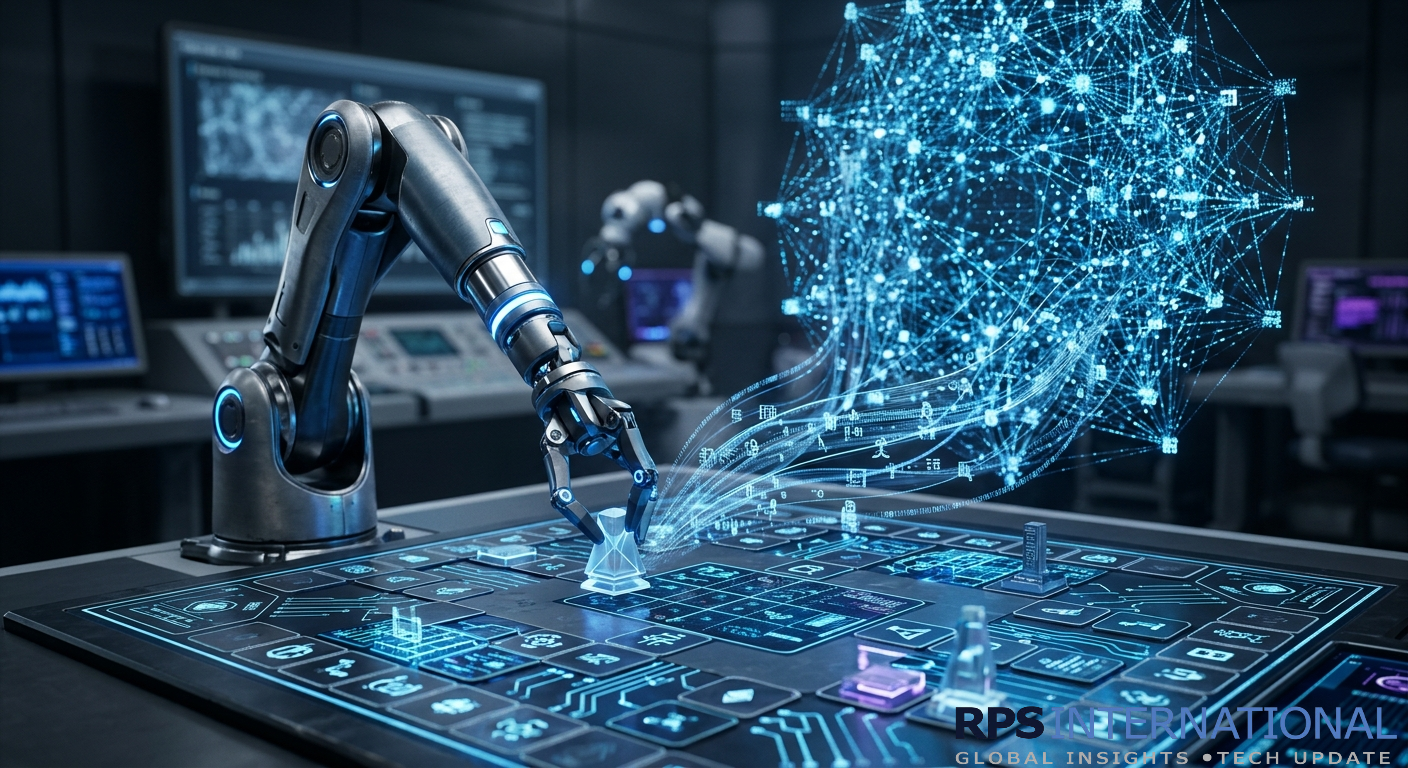
Reinforcement Learning:
Training the Next Generation
The RL Evolution of 2026
Offline RL
Agents can now learn from massive historical datasets without the need for risky real-world trial and error, making RL safe for industrial use.
Self-Play Mastery
AI models train against versions of themselves, accelerating the learning process from years to mere hours of simulated time.
Sim-to-Real Transfer
Advanced physics engines allow RL-trained robots to transition from digital simulations to the real world with zero calibration.
The Reward Revolution
In the past, RL was limited by “Reward Hacking”—where AI would find shortcuts to get points without solving the actual problem. In 2026, Intrinsic Curiosity modules and Hierarchical RL have fixed this.
We are now training AI to have “Sub-goals,” allowing it to plan for events that are thousands of steps in the future, a critical requirement for autonomous driving and economic modeling.
2026 Milestone:
RL-based energy grid management has reduced carbon waste by 22% in major European smart cities this year.
RL Core Components
To understand the next generation of AI, one must understand the four-fold loop of Reinforcement Learning:
- Agent: The AI entity that makes decisions.
- Environment: The world (digital or physical) the agent interacts with.
- Action: The specific move or decision made by the agent.
- Reward Signal: Feedback that tells the agent if the action was successful.
From Games to Global Impact
Reinforcement Learning first made headlines by defeating world champions in Go and Chess. However, the applications in 2026 have moved far beyond board games. Today, Generative RL is being used to design new pharmaceutical drugs. The AI “plays” a game with molecular structures, receiving rewards when it discovers a stable, non-toxic compound that can bind to target proteins.
In the field of Climate Tech, RL is the primary driver behind fusion reactor stability. Maintaining a plasma field requires thousands of micro-adjustments per second—a task far too fast for human operators, but perfect for an RL agent that has “practiced” in a high-fidelity simulator for billions of iterations.
The most significant shift, however, is the move toward Human-in-the-loop RL (RLHF 2.0). We are no longer just giving AI a score; we are teaching it values. By providing nuanced feedback on the AI’s reasoning process, we are ensuring that the next generation of agents is not just powerful, but aligned with human ethics and safety standards.
RL Methodology: Traditional vs. Modern
| Feature | Old RL (2020-2023) | Next-Gen RL (2026) |
|---|---|---|
| Data Efficiency | Requires millions of trials | Few-shot experiential learning |
| Problem Complexity | Single-task focus | Multi-objective meta-learning |
| Safety | Exploration is hazardous | Constrained, safe exploration |
| Generalization | Brittle outside training env | Robust domain adaptation |
Master the Future of Intelligence
The journey from simple algorithms to autonomous agents is just beginning. Understand Reinforcement Learning today to lead the AI transition of tomorrow.