 to offer payments, lending, and insurance directly in-app.)
Embedded Finance:
Why Every App is Becoming a Bank
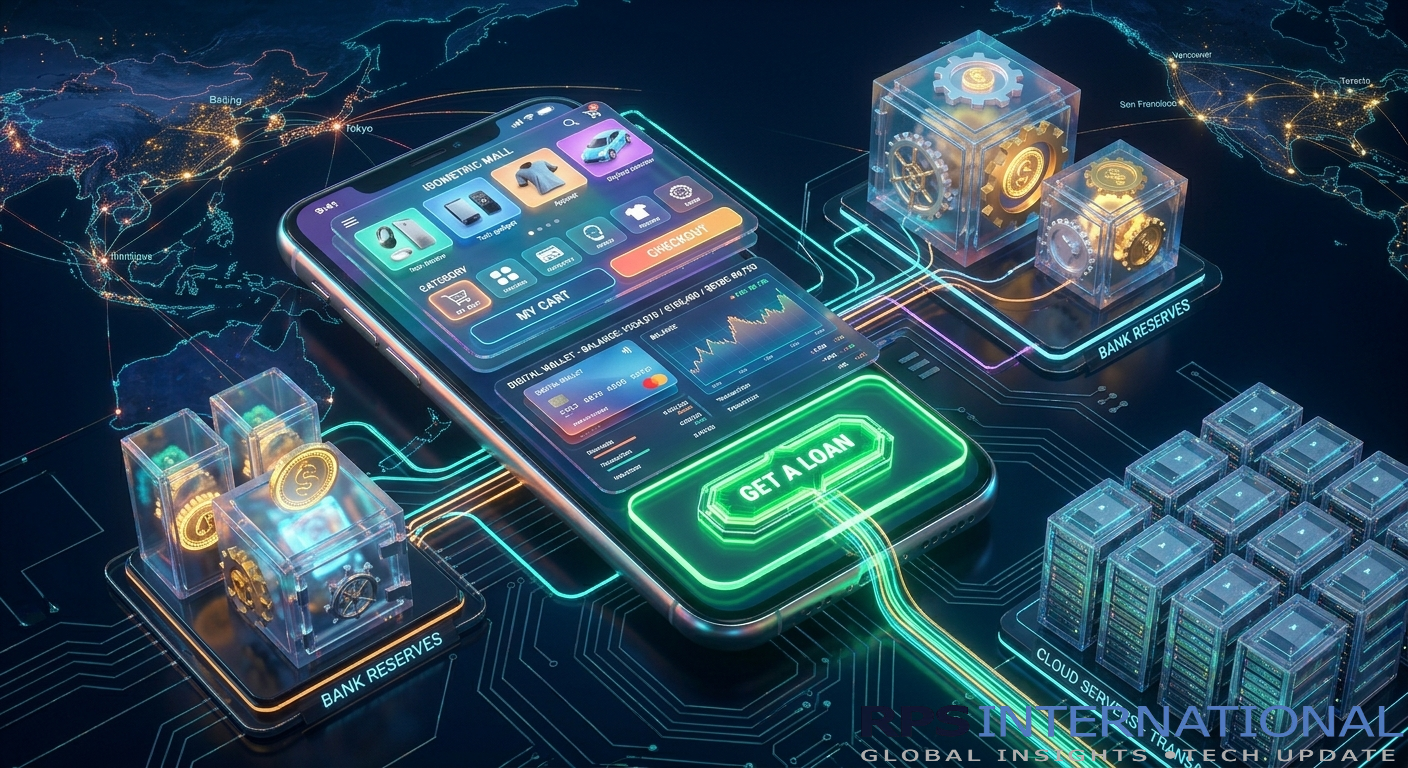
The Embedded Ecosystem
Embedded Payments
The foundation of the trend. One-click checkout and automated subscription management integrated into the software you already use.
Embedded Lending (BNPL)
Instant credit decisions at the digital checkout counter, allowing consumers to split payments without visiting a separate bank site.
Embedded Insurance
Protective coverage added to a flight booking or an electronics purchase with a single toggle, priced in real-time by AI algorithms.
Why Brands Are Turning Into Fintechs
For non-financial companies, embedded finance isn’t just a convenience—it’s a massive revenue driver. By controlling the payment layer, brands can capture interchange fees and interest income that previously went to traditional banks.
More importantly, it drastically increases customer retention. If your accounting software also handles your business loans and payroll, the cost of switching to a competitor becomes prohibitively high.
2026 Market Data:
The global embedded finance market is projected to exceed $350 billion in annual revenue by the end of 2026.
How the “Stack” Works
Embedded finance relies on a three-tier architectural model that connects the old world of finance with the new world of apps:
- The License Holder: Traditional banks that provide the regulatory charter and balance sheet.
- The BaaS Provider: The API layer (like Stripe or Unit) that translates complex banking code into developer-friendly tools.
- The Brand: The consumer-facing app (like Shopify or Grab) that embeds the service into its UX.
The Shift from “Contextual” to “Predictive” Finance
In 2026, we are moving past simple contextual banking. Early embedded finance was reactive—offering a loan when you were at the checkout. Today, it is predictive. By analyzing real-time data from an ERP (Enterprise Resource Planning) system, a BaaS provider can offer a business a “bridge loan” three days before they actually run out of cash, based on upcoming invoice dates and historical cash flow.
This “Just-in-Time” financing is powered by Open Banking APIs. Since the brand already has deep access to the user’s data (purchase history, frequency, behavior), they can underwrite risk more accurately than a traditional bank using a stale credit score. This allows for lower interest rates and higher approval for underserved demographics.
Traditional vs. Embedded Banking
| Feature | Traditional Model | Embedded Model (2026) |
|---|---|---|
| Customer Journey | Fragmented (Go to Bank App) | Unified (Stay in Social/Work App) |
| Data Source | Credit Bureau Reports | Real-time Platform Activity |
| Service Speed | Days / Weeks | Instant / Milliseconds |
| Cost of Acquisition | High (Marketing/Branches) | Near-Zero (Existing User Base) |
Integrate Finance Into Your Product
The most successful companies of 2026 aren’t just selling products; they are providing the financial fuel to buy them. Join the embedded revolution.