
REGENERATIVE TRAVEL:
THE NEW LUXURY
A Hands-On Legacy
Mineral Accretion Technology
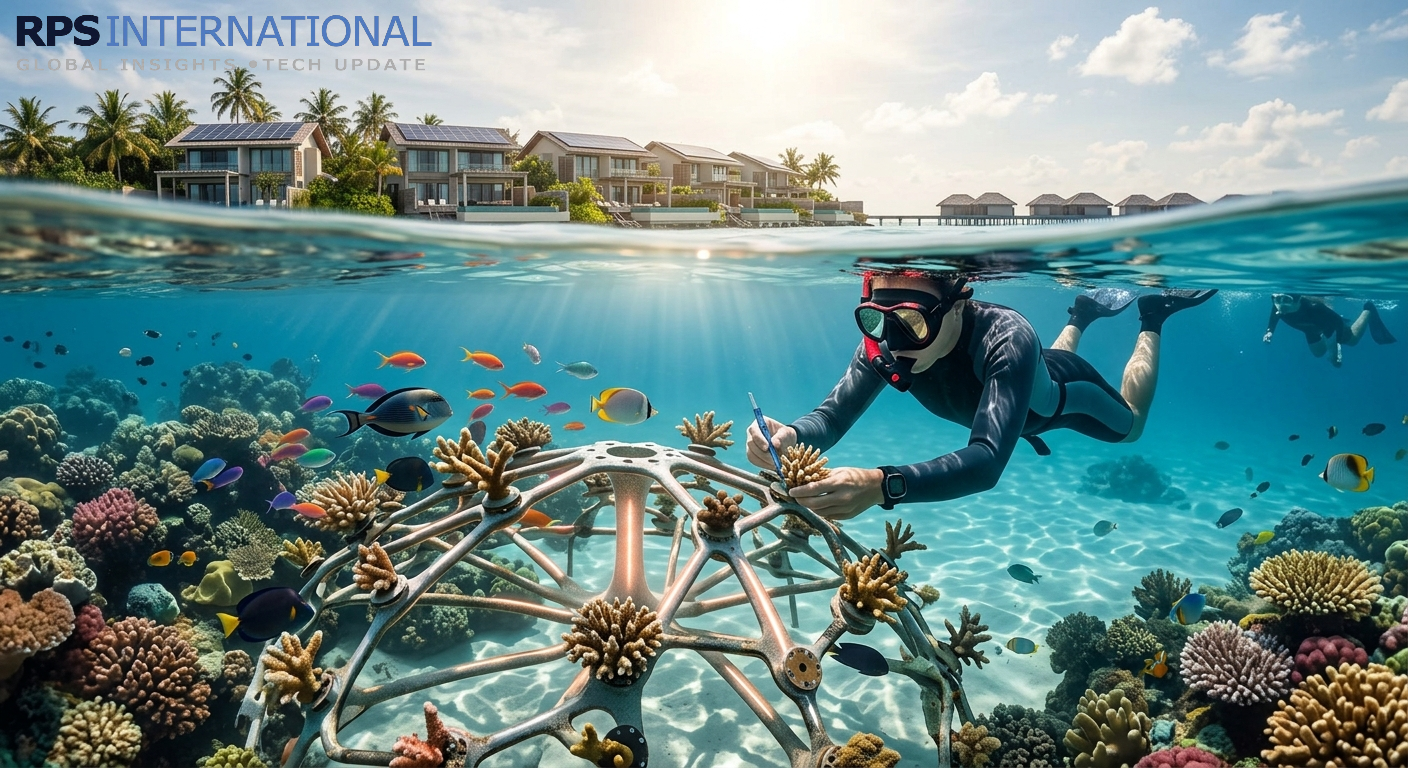
Guests sponsor ‘Coral Tables’ that use low-voltage currents to accumulate calcium carbonate. These state-of-the-art nurseries reach maturity in just 10-12 months, allowing for rapid out-planting onto damaged house reefs.
Citizen Science & 3D Mapping
Using underwater AI cameras, tourists help conduct the ‘Kanuhura Coral Census.’ This 3D monitoring program provides researchers with real-time data on reef health, species diversity, and post-bleaching recovery rates.
2026 Milestone: Vommuli Island
“We’ve officially hit the 300th coral frame milestone in 2026. This isn’t just a number; it represents 16,800 coral fragments across 13 species. For the first time, our earliest frames are now ‘donor colonies’—the reef is literally feeding itself.”
— Hazel Araujo, Lead Marine Biologist
Become a Guardian of the Blue.
Join the 2026 Maldives Coral Census. Explore regenerative travel packages designed to heal the ocean.