
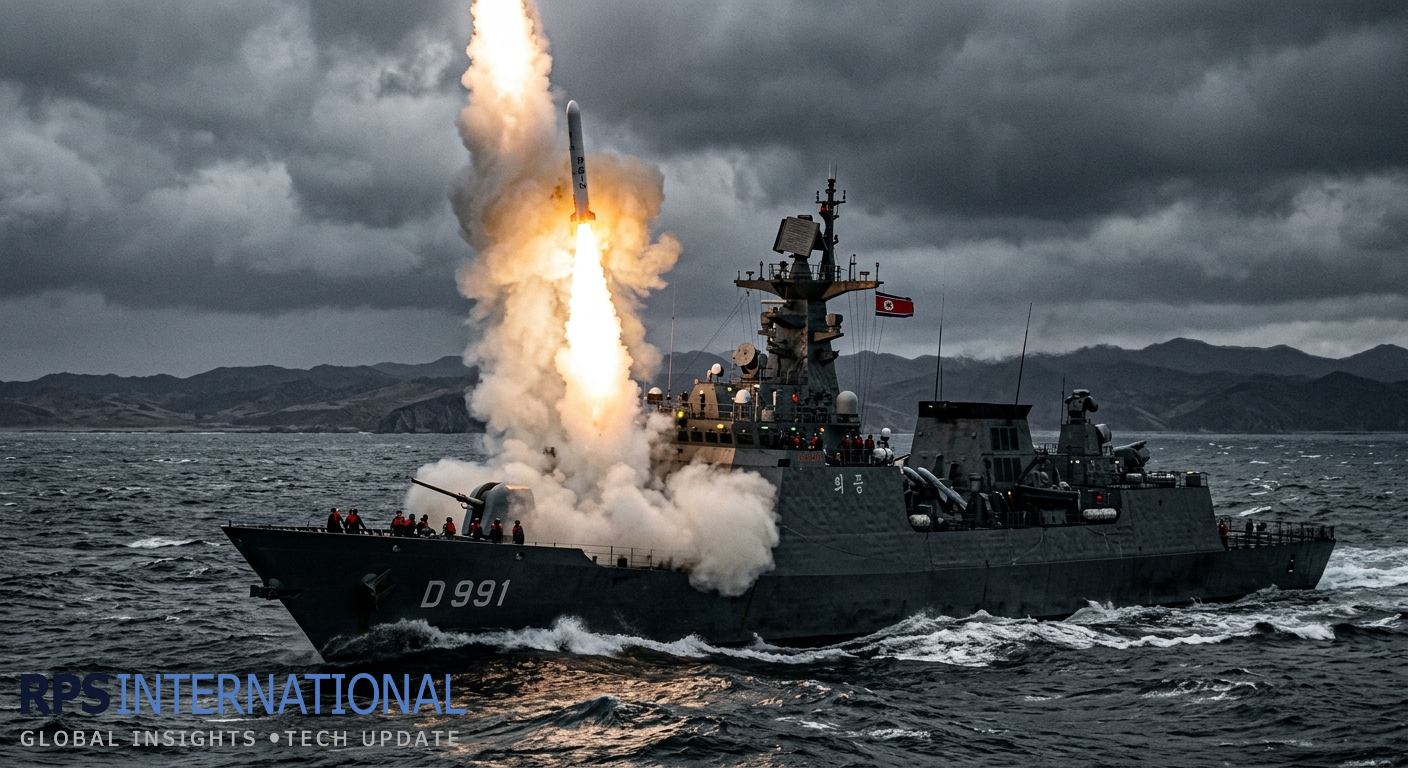
PYONGYANG’S
MARITIME THREAT
Technical Evolution of the DPRK Navy
Sea-Skimming Manueverability
The 2026 Pulhwasal missiles utilize advanced terrain-following and sea-skimming algorithms. By maintaining a flight path just meters above the wave tops, these missiles exploit the ‘radar horizon,’ making them difficult for ship-based interceptors to track until it is too late for a successful engagement.
Surface Fleet Modernization
The destroyer used in the 2026 tests appears to be part of a new class of North Korean vessels equipped with Indigenous Vertical Launch Systems (VLS). This modernization suggests that Pyongyang is moving away from aged, Soviet-era patrol boats toward a credible green-water navy capable of regional power projection.
“Pyongyang is no longer just building missiles; they are building a maritime strike ecosystem. The ability to launch cruise missiles from surface ships creates a 360-degree threat profile that regional powers must now account for. This is a classic ‘Area Denial’ strategy designed to push allied navies further from the peninsula.”
— Julian Vane, Regional Defense Analyst 2026
Monitoring the Peninsula.
Stay ahead of East Asian military developments. Access the 2026 Intelligence Brief on North Korean Naval Capabilities.